
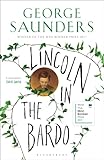
Lincoln in the Bardo : a novel / George Saunders.
Material type: TextPublisher: London : Bloomsbury Publishing, c2017Edition: Trade paperback editionDescription: 350 pages ; 21 cmContent type: text Media type: unmediated Carrier type: volumeISBN: 9781408871751 [paperback]Subject(s): Lincoln, Abraham, 1809-1865 -- Fiction | Lincoln, Abraham 1809-1865 -- Fiction | Lincoln, Abraham, 1809-1865 | Presidents -- United States -- Fiction | Grief -- Fiction | Presidents -- United States -- Fiction | Grief -- Fiction | Grief | Presidents | United StatesGenre/Form: Historical fiction. | Biographical fiction. | Fiction. | Historical fiction. | Biographical fiction. | Biographical fiction. | Historical fiction.Summary: "February 1862. The Civil War is less than one year old. The fighting has begun in earnest, and the nation has begun to realize it is in for a long, bloody struggle. Meanwhile, President Lincoln's beloved eleven-year-old son, Willie, lies upstairs in the White House, gravely ill. In a matter of days, despite predictions of a recovery, Willie dies and is laid to rest in a Georgetown cemetery. "My poor boy, he was too good for this earth," the president says at the time. "God has called him home." Newspapers report that a grief-stricken Lincoln returns, alone, to the crypt several times to hold his boy's body. From that seed of historical truth, George Saunders spins a story of familial love and loss that breaks free of its historical framework into a supernatural realm both hilarious and terrifying. Willie Lincoln finds himself in a strange purgatory where ghosts mingle, gripe, commiserate, quarrel, and enact bizarre acts of penance. Within this transitional state -- called, in the Tibetan tradition, the bardo -- a monumental struggle erupts over young Willie's soul. Lincoln in the Bardo is an astonishing feat of imagination and a bold step forward from one of the most important and influential writers of his generation. Formally daring, generous in spirit, deeply concerned with matters of the heart, it is a testament to fiction's ability to speak honestly and powerfully to the things that really matter to us. Saunders has invented a thrilling new form that deploys a kaleidoscopic, theatrical panorama of voices to ask a timeless, profound question: How do we live and love when we know that everything we love must end?" -- Publisher's description.
| Item type | Current location | Call number | Status | Date due | Barcode |
|---|---|---|---|---|---|
 Fiction
|
College Library Fiction | F Sa87l 2017 (Browse shelf) | Available | 3UCBL000028850 |
"February 1862. The Civil War is less than one year old. The fighting has begun in earnest, and the nation has begun to realize it is in for a long, bloody struggle. Meanwhile, President Lincoln's beloved eleven-year-old son, Willie, lies upstairs in the White House, gravely ill. In a matter of days, despite predictions of a recovery, Willie dies and is laid to rest in a Georgetown cemetery. "My poor boy, he was too good for this earth," the president says at the time. "God has called him home." Newspapers report that a grief-stricken Lincoln returns, alone, to the crypt several times to hold his boy's body. From that seed of historical truth, George Saunders spins a story of familial love and loss that breaks free of its historical framework into a supernatural realm both hilarious and terrifying. Willie Lincoln finds himself in a strange purgatory where ghosts mingle, gripe, commiserate, quarrel, and enact bizarre acts of penance. Within this transitional state -- called, in the Tibetan tradition, the bardo -- a monumental struggle erupts over young Willie's soul. Lincoln in the Bardo is an astonishing feat of imagination and a bold step forward from one of the most important and influential writers of his generation. Formally daring, generous in spirit, deeply concerned with matters of the heart, it is a testament to fiction's ability to speak honestly and powerfully to the things that really matter to us. Saunders has invented a thrilling new form that deploys a kaleidoscopic, theatrical panorama of voices to ask a timeless, profound question: How do we live and love when we know that everything we love must end?" -- Publisher's description.
Adult
Lauron, Rodello General Education Fiction
English
There are no comments on this title.