
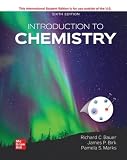
Introduction to chemistry / by Richard C. Bauer, James P. Birk and Pamela S. Marks.
Material type: TextPublisher: New York, NY : McGraw Hill LCC, c2025Edition: Sixth editionDescription: xxiv, 745, A-1, A-49, G-1, G-7, I-1, I-12 pages : colored illustrations ; 27.5 cmContent type: text Media type: unmediated Carrier type: volumeISBN: 9781266878275 [paperback]Subject(s): Chemistry | Science
| Item type | Current location | Call number | Status | Date due | Barcode |
|---|---|---|---|---|---|
 Subject Reference
|
College Library Subject Reference | 540 B32 2025 (Browse shelf) | Available | 3UCBL000029894 |
Includes appendix, glossary and index.
Contents: 1 Matter and energy — 2 Atoms, Ions, and the periodic table — 3 Chemical compounds — 4 Chemical composition — 5 Chemical reactions and equations — 6 Quantities in chemical reactions — 7 Electron structure of the atom — 8 Chemical bonding — 9 The gaseous state — 10 The liquid and solid states — 11 Solutions — 12 Reaction rates and chemical equilibrium — 13 Acids and bases — 14 Oxidation-reduction reactions — 15 Nuclear chemistry — 16 Organic chemistry — 17 Biochemistry — Appendices.
"The sixth edition of Introduction to Chemistry continues to build on our belief that students learn best when the text and our classroom presentations focus on a conceptual approach to chemistry. Our class meetings are significantly different from traditional lecture presentations in many ways. Beginning with the first week of classes and continuing through the rest of the semester, we follow a sequence of topics that allows us to explain macroscopic phenomena from a molecular perspective. This approach places emphasis on conceptual understanding over algorithmic problem solving. To help students develop conceptual understanding, we use numerous images, animations, video clips, and live demonstrations. An update to the art program for this edition enhances visualization of molecular-level structure and behavior. Roughly a third of each class period is devoted to explaining chemical phenomena from a conceptual perspective. During the remaining time, students work in groups to discuss and answer conceptual and numerical questions." —Preface
Adult
Purchased Lauron, Rodello General Education General Education : Chemistry
Text in English
There are no comments on this title.